


Cyanobacteria and stromatolites
The Cyanobacteria comprise only one clade of photosynthetic bacteria. The Cyanobacteria differ from other clades of photosynthetic bacteria in that they utilize both photosystems I and II. Cyanobacteria perform oxygenic photosynthesis through photosystem II, so they evolve oxygen, and are generally believed responsible for the rise in atmospheric oxygen that followed their emergence at least 3450 million years ago.
The ability of Cyanobacteria renders them ecologically important both as primary producers and for their ability to fix nitrogen.
Cyanobacteria process only chlorophyll a. Their accessory pigments include carotenoids, but the presence of the phycobilins (phycoerythrin and phycocyanin) are a feature of the group. Cyanobacteria undoubtedly gave rise to the chloroplasts of eukaryotic cells through the process of endosymbiosis.
Several of the Cyanobacteria show a striking resemblance to fossil counterparts [im, image links]. It has been suggested that "exchange of genetic material for neutrally evolving genes may explain the apparent stability of cyanobacterial morphological characters, perhaps over billions of years." [R]

Two alternative views on the relationship of the major lineages (omitting viruses) of Life on Earth (left). Modern extremophiles are considered closely related to the Archaea.
Genome analysis has provided some clarification, but horizontal gene transfer between prokaryotes blurs evolutionary relationships.

The ability of Cyanobacteria renders them ecologically important both as primary producers and for their ability to fix nitrogen.
Cyanobacteria process only chlorophyll a. Their accessory pigments include carotenoids, but the presence of the phycobilins (phycoerythrin and phycocyanin) are a feature of the group. Cyanobacteria undoubtedly gave rise to the chloroplasts of eukaryotic cells through the process of endosymbiosis.
Several of the Cyanobacteria show a striking resemblance to fossil counterparts [im, image links]. It has been suggested that "exchange of genetic material for neutrally evolving genes may explain the apparent stability of cyanobacterial morphological characters, perhaps over billions of years." [R]

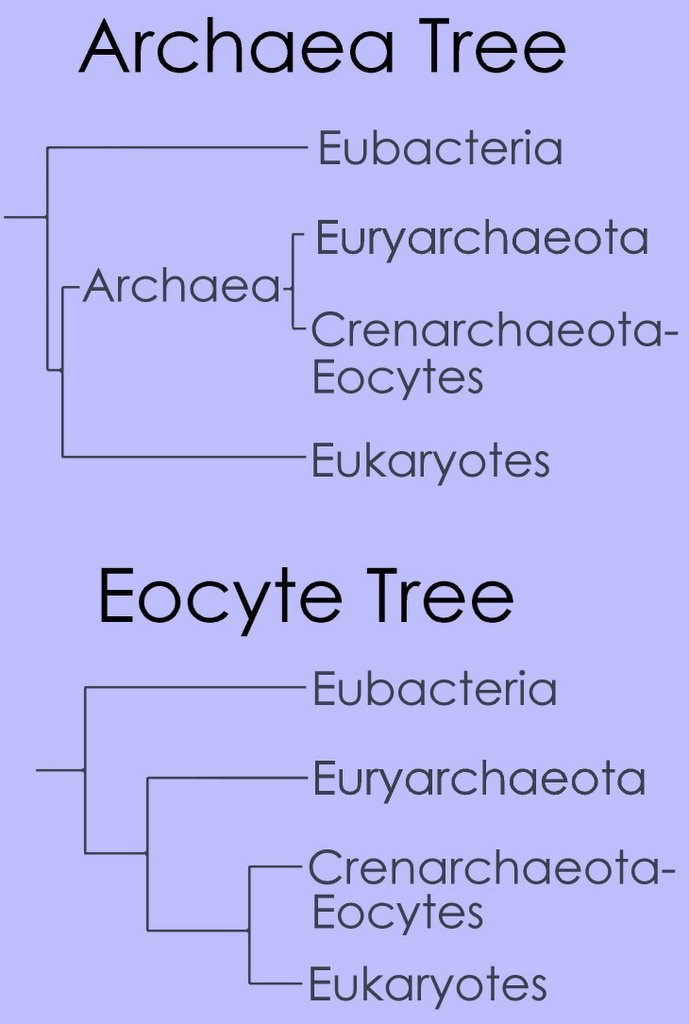
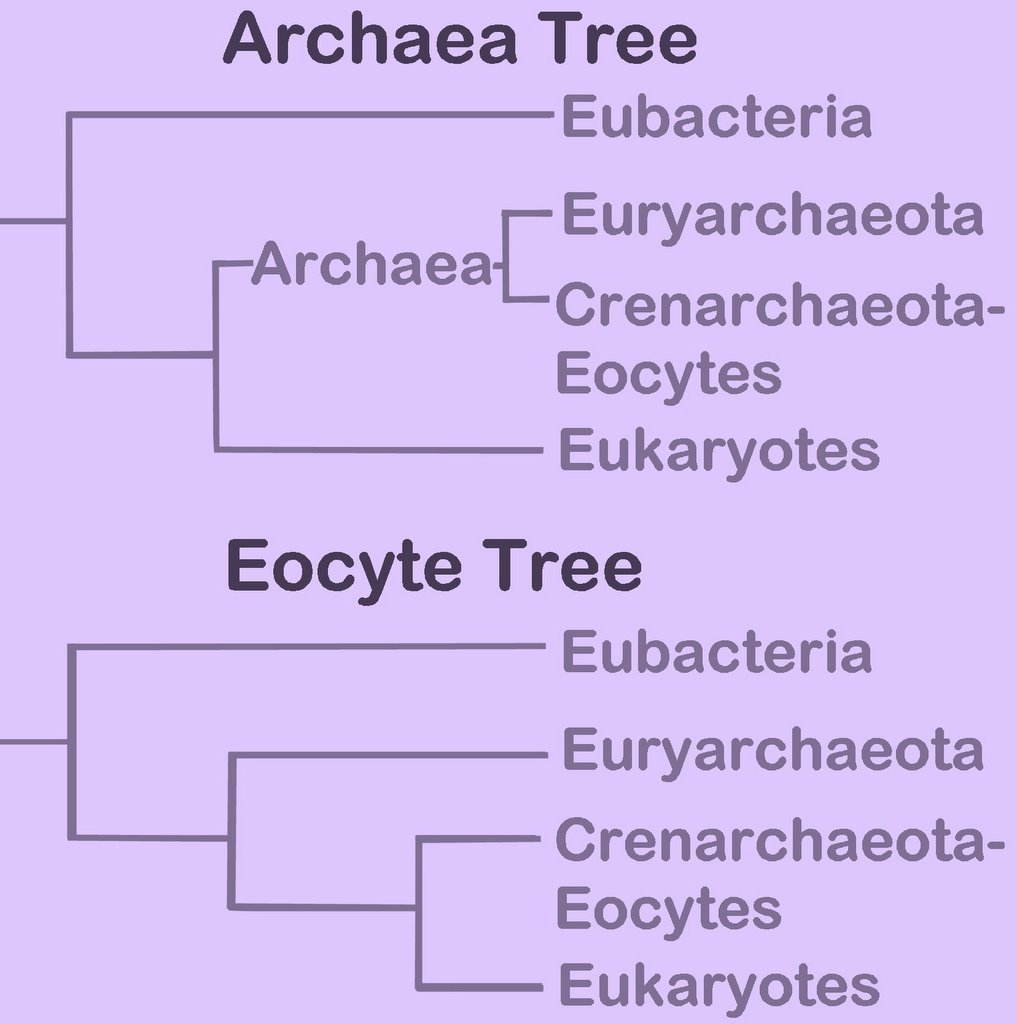
Two alternative views on the relationship of the major lineages (omitting viruses) of Life on Earth (left). Modern extremophiles are considered closely related to the Archaea.
Genome analysis has provided some clarification, but horizontal gene transfer between prokaryotes blurs evolutionary relationships.
Labels: Archaea Tree, Cyanobacteria, Eocyte Tree, fossils, oxygenic photosynthesis, pigments, stromatolites
| 0 Guide-Glossary